AI Overview
Childhood abuse profoundly impacts the developing brain and nervous system, manifesting in adulthood through psychological, physical, and behavioral symptoms. Survivors frequently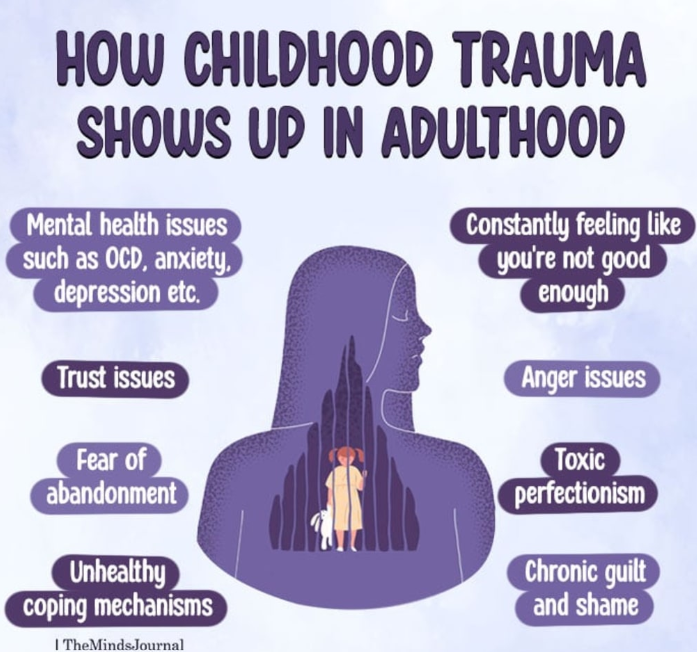 experience chronic anxiety, depression, complex post-traumatic stress disorder (C-PTSD), and hypervigilance, as well as physical ailments like chronic pain and insomnia.
Mission Connection Healthcare +1
The long-term effects of childhood abuse in adults typically fall into the following areas:
- Psychological & Emotional Symptoms
- Trauma Disorders: Survivors often live with PTSD or C-PTSD, which include flashbacks, intrusive thoughts, and emotional numbness.
- Emotional Dysregulation: Difficulty managing feelings can result in intense mood swings, sudden anger, or an inability to self-soothe when stressed
- Shame and Low Self-Esteem:An internalized belief that they are “defective” or somehow to blame for the abuse.
- Hypervigilance: A continuous, exhausting state of scanning the environment for danger or anticipating shifts in the moods of others.
ACOG +4
- Relationship & Social Challenges
- Attachment Issues: Fear of abandonment and difficulty establishing boundaries.
- Trust Issues: Suspicion of others’ motives, making it hard to form deep, intimate connections.
- People-Pleasing: A compulsive need to accommodate others at their own expense to avoid conflict or rejection.
Yeshiva University +3
- Behavioral Symptoms
- Maladaptive Coping: Resorting to substance abuse, self-harm, or impulsive/risky behaviors to numb emotional pain.
- Dissociation: Mentally disconnecting from reality, one’s body, or one’s surroundings as a mechanism to avoid overwhelming feelings.
- Compulsive Behaviors: Engaging in excessive working, eating disorders, or other repetitive behaviors aimed at regaining a sense of control.
ACOG +5
- Physical Symptoms (Somatization)
- Chronic Pain: Unexplained widespread muscle pain (like fibromyalgia), persistent headaches, or gastrointestinal issues (e.g., IBS) due to the mind-body connection.
AMFM Mental Health Treatment
- Sleep Disturbances: Insomnia, night terrors, or chronic fatigue that is not resolved by rest.
AMFM Mental Health Treatment
- Stress-Related Illness: Heightened cortisol levels and disrupted stress regulation, which can increase the risk of adult cardiovascular and autoimmune disorders.
AMFM Mental Health Treatment
Resources for survivors, including trauma-informed care and support directories, are available through the National Child Traumatic Stress Network. If you are struggling, confidential support is available 24/7 by calling or texting the Suicide & Crisis Lifeline at 988.